WASHINGTON, D.C. — This week, Congresswoman Diana Harshbarger (R-TN), Co-Chair of the Congressional Bipartisan Rural Health Caucus, delivered remarks on the House Floor celebrating National Rural Health Month and reaffirming her commitment to strengthening healthcare access in America’s small towns and rural communities.
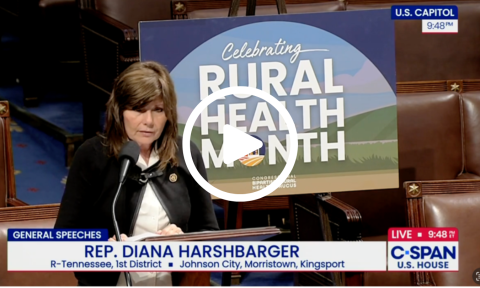
Harshbarger recognized the nurses, doctors, pharmacists, and first responders who “keep healthcare alive in America’s small towns and rural communities,” noting that in East Tennessee, “rural healthcare, it’s a lifeline.”
“They [Rural Americans] depend on a nurse to drive during the night and before dawn to check on a patient, or the pharmacist who knows every family by name and stretches every dollar to keep medicine affordable. It’s the doctor who stays late to see one more patient because there’s no one else to take the next shift — these are the people who form the backbone of our rural healthcare communities,” said Harshbarger. “They deserve a system that works as hard for them as they do for us.”
Harshbarger highlighted the challenges facing rural communities, including hospital closures, strained workforces, and Pharmacy Benefit Managers (PBMs) driving independent pharmacies out of business. She underscored her bipartisan work to bring transparency and accountability to PBMs and to support domestic pharmaceutical manufacturing, including facilities like USAntibiotics in Bristol, TN.
As Co-Chair of the Rural Health Caucus, Harshbarger celebrated this year’s passage of the Working Families Tax Cuts, signed into law by President Trump, which contains the largest rural healthcare investment in American history — a $50 billion Rural Health Transformation Fund.
“This critical legislation included the single largest investment in rural healthcare in history, Harshbarger said. “That’s $50 billion for a rural healthcare transformation fund to reinvest federal savings directly into the communities who need it most, expand telehealth, and recruiting and retaining rural healthcare workers.”
Harshbarger also highlighted her bill, the Rural Physician Workforce Production Act, which would give rural hospitals the tools they need to train, attract, and retain more physicians.
“These aren’t abstract policy debates — they are about real people in real places,” Harshbarger said. “They are about the mom who drives an hour to find a pediatric specialist. They are about the veteran who can’t get his prescription filled because his local pharmacy closed. They are about the nurse who works back-to-back shifts because there aren’t enough hands to go around. And those stories are what drive my work every single day.”
Harshbarger closed by announcing a bipartisan resolution she introduced with Representative Jill Tokuda (D-HI) and 37 bipartisan colleagues recognizing November 20th, 2025, as National Rural Health Day (H. Res. 891).
“Thank you, Representative Tokuda for your continued commitment on working together to address the pressing healthcare issues facing our rural communities,” Harshbarger said. “We must fight for a healthcare system that serves patients not big insurance companies. That values rural providers and not red tape. And ensures no community, no matter how small or remote, is left behind.”